 Skip to content

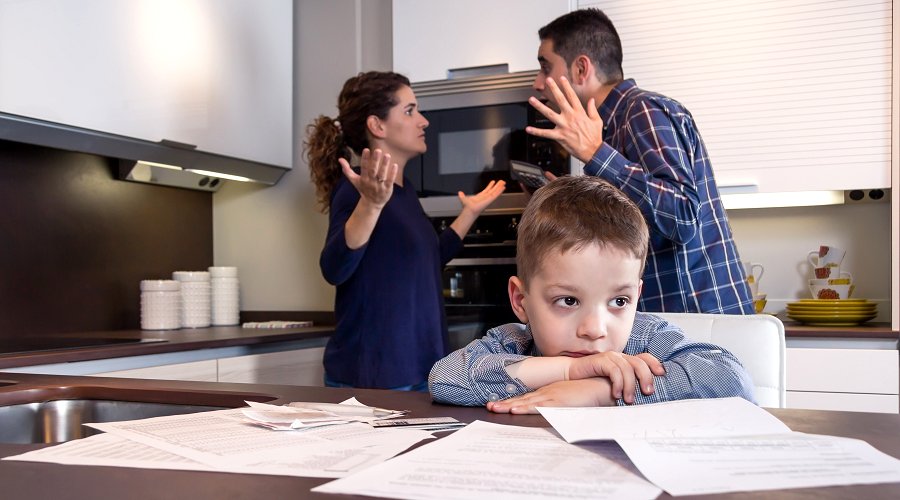
Researchers at the University of York say children of divorcees are around 30 per cent more likely to have behaviour or emotional issues because of the arguing at home they have witnessed.
The research was based on data from 19,000 children born in the UK in 2000 and looked at ‘non-cognitive’ skills such as behaviour, emotional issues and interaction with peers.
The findings were presented at the Royal Economic Society’s annual conference in Bristol. The study also found that children of divorce perform about 20 per cent lower for cognitive skills. This gap is largely down to parents’ education and finances, the study suggested.
Divorced parents Gloria Moroni, from the Department of Economics and Related Studies, said: “The main result of my research is that the fact that children of divorced parents have on average lower cognitive and non-cognitive skills compared with children of intact families is not necessarily due to divorce itself.
“Most of the damage is given by pre-divorce circumstances and characteristics of the family.
“For example, parents who decide to divorce may also be lower-educated, may also be poorer, or they may have more conflictual relationships.
Cognitive gaps
She added: “The most interesting thing is that when comparing cognitive and non-cognitive skills, what we find is that cognitive gaps are mainly driven by the fact that parents who decide to divorce are also for example, less educated and have lower financial resources. But on the other hand, the non-cognitive gaps are mostly driven by the fact that parents who divorce have more conflictual relationships.
Dr Moroni said that the results suggest that interventions that encourage parents to co-operate, or that make them aware of the negative impact of conflicts on children, could help to close these non-cognitive gaps.
Expert opinion
E. Mark Cummings, a psychologist at Notre Dame University, says that such parental conflict is inevitable, but with the right response, conflicts can be transformed into moments benefiting children, the Huffington Post reports.
Speaking with Developmental Science, Cummings said that when kids witness their parents fighting and then eventually resolving the issue, “they’re actually happier than they were before they saw it.”
When parents are able to resolve conflicts, their children are assured that they can work things out. When parents fight each other and come out of the room pretending everything’s fine, however, the children will notice that both parents are merely acting. Thus, parents should learn to work things out.
Kids can tell the difference between a resolution that’s been forced versus one that’s resolved with positive emotion,” Cummings said, “and it matters.