
 Skip to content
Children do not come with an instruction manual.

When your child is struggling and you are not sure whether it is a phase or something more, the uncertainty can be exhausting.
At ImPossible Psychological Services, our child psychologists and child therapists in Singapore work with children and adolescents aged 8 to 18, and just as closely with the parents raising them. We help you understand what is driving your child's behaviour, then build a plan you can actually use at home and at school.
We are located at 360A Joo Chiat Road, a short walk from Marine Parade MRT and i12 Katong.
A child psychologist or therapist is a mental health professional trained to assess and treat emotional, behavioural, developmental and learning difficulties in children and adolescents. In Singapore, a child psychologist typically holds a Master’s or Doctorate in clinical, counselling or educational psychology, and works through structured assessment and evidence-based talking or behavioural therapy rather than medication.
A child therapist is the broader term. It covers child psychologists, counsellors and art therapists who provide ongoing therapeutic support to a young person.
The distinction matters when you are deciding who to see, so here it is plainly:
ProfessionalChild psychiatrist
ProfessionalChild psychologist
ProfessionalChild behaviour psychologist
ProfessionalChild counsellor
ProfessionalArt therapist
In short: if you want to understand what is going on and get it documented, you need a psychologist. If your child needs a consistent, safe space to work through feelings, a child therapist or counsellor is often the right starting point. Many families need both, and we will tell you honestly which one you are looking at.
Your child likely needs a professional evaluation when a difficulty has lasted more than two to four weeks and is interfering with at least one area of daily life: sleep, appetite, friendships, family relationships, or school performance.
That is the practical threshold most clinicians use. Ordinary childhood ups and downs resolve on their own. Clinical concerns tend to persist and spread.
Persistent sadness, irritability, worry, or mood swings beyond what you would expect for their age.
New aggression, defiance, withdrawal, clinginess, or regression to younger behaviours.
Refusing to go to school, frequent complaints of feeling unwell on school mornings, or grades falling without a clear reason.
Trouble making or keeping friends, being bullied, bullying others, or pulling away from friendships they previously valued.
Recurring headaches or stomachaches, especially before school or exams.
Difficulty falling asleep, nightmares, or noticeable changes in eating.
This warrants immediate attention, not a wait-and-see approach.
If your child has expressed thoughts of harming themselves, please contact us directly, or call the Samaritans of Singapore (SOS) 24-hour hotline at 1767 or IMH’s Mental Health Helpline at 6389 2222.
We work with children and adolescents aged 8 to 18. Because an eight-year-old and a sixteen-year-old need very different things from a therapist, we adjust the approach accordingly.
At this stage, most of the therapeutic work happens through the parents.
Children this young often cannot describe what they feel, so we use expressive methods and behavioural strategies, and we spend a significant portion of our time coaching you on what to do differently at home.
Common concerns: separation anxiety, tantrums and meltdowns, toileting regression, difficulty settling in school, early signs of ADHD or learning difficulty, sibling conflict.
This is when academic pressure meets emerging self-awareness. Children begin comparing themselves to peers, and the stakes around PSLE can make ordinary anxiety feel enormous.
Common concerns: exam anxiety, perfectionism, low self-esteem, friendship exclusion, screen and gaming overuse, motivation loss, behavioural issues at school.
Adolescents need a space that is genuinely their own. Our approach here shifts toward direct individual work, with parents kept informed on themes and safety rather than session-by-session detail.
Common concerns: depression and anxiety, self-harm, body image and eating concerns, identity questions, family conflict, romantic relationships, substance use, academic burnout, social media pressure.
Most parents searching for a child therapist in Singapore are not only asking “does my child need help.” They are asking “how does this actually work here.” This section answers that, honestly, including where the public route may serve you better than we can.
Go public if cost is the main constraint and you can wait. Go private if you need to be seen soon, or you want continuity with one clinician.
The public route. A polyclinic or GP referral can get your child into a public service such as the KK Women's and Children's Hospital Department of Child Development, the National University Hospital Child Development Unit, or the Institute of Mental Health Child Guidance Clinic. Care is subsidised, and for developmental assessments these units are excellent. The trade-off is waiting time, which can run from several weeks to several months depending on the service and the urgency of the referral, and you may see different clinicians across appointments.
The private route. We can usually offer an appointment within days rather than months, your child sees the same therapist throughout, and session timing is flexible around school hours. You pay out of pocket.
What we tell parents: these are not mutually exclusive. Some families begin privately to get moving, while remaining on a public waitlist for a subsidised formal assessment. If that is the sensible path for your family, we will say so.
There is also a free, community middle ground worth knowing about. IMH's REACH (Response, Early intervention and Assessment in Community mental Health) teams work directly with schools and can support students without any private fee. Family Service Centres across Singapore also offer counselling on a sliding scale based on household income.
No. Psychologists and counsellors in Singapore are not licensed under the Ministry of Health, unlike doctors and psychiatrists. This means the title "child psychologist" is not legally protected, so verifying credentials is entirely on you as a parent.
What to check before you book anyone, including us:
Our team's qualifications, registrations and areas of specialisation are listed individually on our Team page. Our founder, Muhammad Haikal Bin Jamil, is a Senior Clinical Psychologist who supervises our associate clinicians.
Yes. A formal diagnostic assessment report from a registered psychologist can be submitted to your child's school to apply for Ministry of Education support, including Access Arrangements for national examinations and Mother Tongue Language exemption or replacement.
Schools and MOE typically consider these reports when deciding on:
Important context so you are not caught out:
We conduct psycho-educational, behavioural and developmental assessments, and we prepare reports intended for school and MOE submission. If a different specialist assessment is more appropriate for your child, we will refer you rather than proceed.
No. Private therapy at our clinic is confidential, and we will not contact your child's school unless you give us written consent.
That said, school collaboration often helps. When a child's difficulty shows up mainly in the classroom, working with the form teacher, school counsellor or AED means the same strategies are reinforced across both environments, and progress tends to be faster and more durable. You control whether this happens, and how much is shared.
Individual sessions with a child therapist trained to build rapport with young people. For younger children this involves expressive and structured activity-based methods. For adolescents it looks more like conversation, skills practice and problem-solving.
Psycho-educational evaluations, behavioural assessments, developmental assessments, and ADHD assessments. Reports are written to be usable, including for school and MOE submission. See assessments
Not a lecture on parenting. Targeted work on the specific patterns playing out in your home, whether that is escalating power struggles, inconsistent boundaries between caregivers, or managing anxiety without reinforcing it.
Sessions involving parents, the child and where useful siblings, to address communication breakdowns, conflict patterns and the effects of transitions such as separation, remarriage, relocation or bereavement.
With your written consent, we work directly with teachers, school counsellors and Allied Educators so strategies are consistent between clinic, home and classroom.
There is no single method that works for every child. Your child’s therapist will select and combine approaches based on their age, presenting concern and personality.
The most extensively researched approach for childhood anxiety and depression. Helps children identify the thoughts driving distress and test them against reality. Adapted with visual and concrete tools for younger children.
Structured work on antecedents, behaviours and consequences. Most effective for defiance, aggression, non-compliance and ADHD-related difficulties, and delivered largely through the parents.
Useful for adolescents with entrenched patterns of self-criticism, perfectionism or relational difficulty, examining how early experiences shaped current beliefs about themselves.
Focuses on the choices a young person is making and the needs those choices are meeting, then builds better strategies. Effective with adolescents who resist being told what to do.
Treats the difficulty as belonging to the family system rather than the child alone. Particularly relevant where the same conflict repeats regardless of which child is involved.
Intake session with child and parents (90 minutes)We start with you, usually without your child present. This may be followed by speaking to your child individually. We gather developmental history, school context, family background and your specific concerns, and we clarify what you are hoping for.
Meeting your child (50 minutes)The first session with your child is mostly about rapport. Nothing heavy, no interrogation. Your child needs to feel that this room is safe before any real work happens.
Formulation and planYour child’s therapist shares what they understand to be happening, recommends an approach and an indicative number of sessions, and flags whether a formal assessment or psychiatric referral would be useful.
Ongoing sessions and parent workTypically weekly or fortnightly, 50 minutes each. Parent updates and coaching are built in, and you will usually leave with something specific to practise at home.
Progress reviewWe review formally with you every four to six sessions. If it is working, we continue. If it is not, we change the approach or refer you to someone better suited. We will tell you when therapy can stop.

Rates vary with the qualifications and experience of the psychologist or counsellor. Sessions outside regular clinic hours and on weekends carry an additional $40 per hour.
If cost is a barrier, please tell us. You can request an associate psychologist or associate counsellor at a lower fee. These are Master’s-level therapists working toward full registration, under close supervision by our senior clinical psychologist. We would rather see your child at a rate that works than not see them at all.
We will also point you to subsidised options where they suit you better, including the public hospital route via polyclinic referral, school-based support through REACH, and Family Service Centres offering sliding-scale fees.
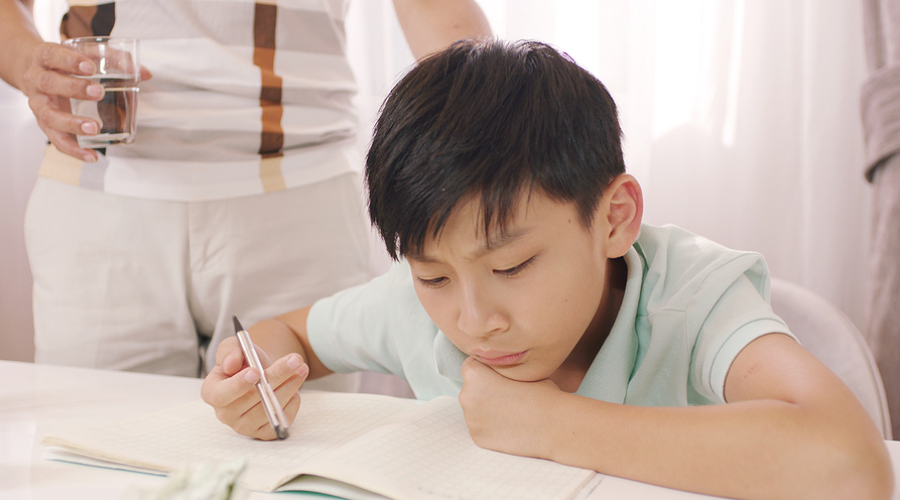
Children do not exist in isolation. Our approach involves parents, and where you consent, the school. This is the difference between a child who behaves well in a therapy room and a child whose life actually improves.
Clinical psychologists, counselling psychologists, and counsellors, so we can match your child to the right clinician rather than fitting your child to whoever is available. Each team member’s qualifications are published on our site.
Where the picture is unclear, we recommend proper assessment rather than months of therapy aimed at the wrong target.
Assessment reports written to support school and MOE applications, documenting functional impact rather than just listing a diagnosis.
If your child needs a psychiatrist, a speech therapist, an occupational therapist or a subsidised public service, we will say so and help you get there.
Our clinic entrance on Joo Chiat Road is positioned for privacy. Accessible from Marine Parade MRT, multiple bus routes, and with carpark access directly opposite.
If you have been watching your child struggle and wondering whether to act, that wondering is usually itself a signal. Early support is consistently easier and shorter than late support.
You do not need a referral, a diagnosis, or a clear explanation of what is wrong. You just need to start the conversation.
If the difficulty has lasted more than two to four weeks and is disrupting sleep, eating, friendships, family life or school, it is worth a professional evaluation. A phase generally stays contained to one area and resolves on its own. A clinical concern tends to persist and spread across areas of life.
You do not need to be certain before booking. A single consultation with a child psychologist can tell you whether to watch and wait or to intervene, and that clarity is valuable on its own.
Book the intake session first. We usually start with you, so their reluctance does not block the process, and it often means the first thing that changes is what you are doing at home rather than what your child is asked to do.
If your child is old enough to have a view, involve them in a limited way. Let them choose the appointment time, or agree to a trial of two sessions with a genuine option to raise concerns afterwards. Forced attendance rarely produces good therapeutic work, but almost no child stays resistant once they discover the therapist is not there to scold them.
No. You can approach a private clinic directly with no referral. A referral is only needed for subsidised care through public hospitals, which requires a polyclinic or GP referral.
Private appointments are typically available within days. This is the main practical advantage over the public route, where waiting times for child development and child guidance services can extend from several weeks to several months.
At our clinic, individual sessions are $180 to $280 for 50 minutes, with a 90-minute first consultation at the same rate band. Across private practices in Singapore, child therapy generally ranges from roughly $180 to $360 or more per session, depending on the clinician's seniority.
Formal psychological assessments are priced separately, from $450 to $2,400 and above depending on the scope of testing required, because they involve multiple testing hours plus scoring, interpretation and report writing.
Yes, through several routes:
Generally no. MediSave and MediShield Life do not typically cover outpatient psychotherapy or psycho-educational assessments provided by psychologists in private practice.
What sometimes does provide coverage:
Check your policy for the terms "psychology," "psychotherapy" and "outpatient mental health" specifically, and ask whether a psychiatrist referral is required for reimbursement. We can provide itemised receipts for claims.
For most presenting concerns, a child psychologist or child therapist is the appropriate starting point. If medication becomes a consideration, we will refer you to a psychiatrist and continue the therapeutic work alongside.
No. Unlike doctors, dentists and nurses, psychologists and counsellors in Singapore are not currently licensed or regulated by the Ministry of Health. There is no legal restriction on calling oneself a psychologist or therapist.
This is why you should verify credentials yourself. Look for a relevant Master's or Doctorate, registration with the Singapore Psychological Society, the Singapore Register of Psychologists or the Singapore Association for Counselling, and active supervision for any clinician who is not yet fully registered. At ImPossible, all our practitioners are registered with either the Singapore Psychological Society or Singapore Association for Counselling.
Tell us. Therapeutic fit is a real clinical variable, not a matter of politeness, and a child who does not feel safe with their therapist will not make progress regardless of the clinician's expertise.
We will either adjust the approach, or match your child with a different therapist on our team, or refer you elsewhere if no one here is the right fit. None of these outcomes is a failure. Give it three or four sessions before judging, since initial reluctance is common and usually passes, but do not persist for months with a poor fit.
Substantially. Parents are active partners in child therapy, not spectators.
Children whose parents engage with the between-session work make faster progress. This is one of the most consistent findings in child therapy research.
Sessions are 50 minutes, with a 90-minute first consultation. Sessions usually start weekly or fortnightly, then space out as your child stabilises and gains skills.
It depends on what you are treating:
We review progress with you every four to six sessions so you are never in open-ended therapy without a clear rationale. We will also tell you when it is time to stop.
Your child gets meaningful privacy about session content. You get the information you need to parent well and keep your child safe.
In practice this means:
Look for change in daily functioning rather than change in the therapy room:
Progress is rarely linear. Behaviour sometimes worsens briefly when a child starts addressing difficult material, which is not a sign therapy is failing. Raise what you observe at review sessions.
A formal assessment report from a registered psychologist can support an application to the school and MOE for Access Arrangements, including extra time, a separate examination room, rest breaks, or a reader or scribe, and for Mother Tongue Language exemption, replacement or a reduced syllabus.
The school and MOE decide, not the psychologist. The report needs to document how the difficulty functionally affects your child's learning and examination performance, not simply state a diagnosis. Apply early, ideally at least a year before the examination year, and be aware schools generally prefer assessments completed within the last two to three years.
No. Private therapy records are held by our clinic and are not linked to school records, MOE systems or any government database. Your child's school is informed only if you consent in writing.
Private therapy records are not shared with MINDEF, CMPB or prospective employers without your consent.
On National Service specifically: during pre-enlistment medical screening, disclosing a relevant mental health history allows CMPB to make an appropriate PES status and vocation assignment. The purpose is safe deployment, not exclusion or penalty. Concealing a significant history is the riskier choice, since it can place a young person in a role that is genuinely unsuitable for them.
On careers: most private-sector employers in Singapore have no access to and no right to request therapy records. A small number of roles involve statutory medical screening. In these cases, evidence of having addressed a difficulty early and successfully is generally viewed more favourably than an untreated history.
The practical calculation for most families is this. Untreated childhood anxiety, depression or behavioural difficulty carries far greater long-term cost to a young person's education, relationships and employability than a confidential therapy record ever will.
Yes. We offer after-school, evening and weekend appointments. Sessions outside regular clinic hours and on weekends carry an additional $40 per hour.
Yes, for adolescents in particular, online sessions can work well and remove travel time. Younger children and any work involving expressive methods generally do better in person. Your child's therapist will advise on what suits your situation.
Contact Us
360A Joo Chiat Road Singapore 427605
© 2026 ImPossible Psychological Services. All Rights Reserved.
Directions
Overview of Location
ImPossible Psychological Services is located along Joo Chiat Road. The clinic is on the second floor of a shophouse directly above Joo Heng Restaurant. The area is famous for its iconic shophouses and for being a food haven. However, a strategic location of our entrance provides a safe and private environment for our clients.
Getting Here by Bus
16 (alight at Joo Chiat Road, bus stop code: 92179)
33 (alight opposite Marantha Hall, bus stop code: 82131)
10, 12, 14, 32, 40 (alight at East Coast Road, bus stop code: 92121 or 92129, followed by a 7 mins walk)
Getting Here By Train
Dakota MRT (CC8)
Getting Here by Car
You can come via ECP (Marine Parade exit) or PIE (Eunos exit). Proceed along East Coast Road, and enter Joo Chiat Road at the junction where i12 Katong is located.
ImPossible Psychological Services is located diagnonally opposite an open space carpark along Joo Chiat Road (J0017).