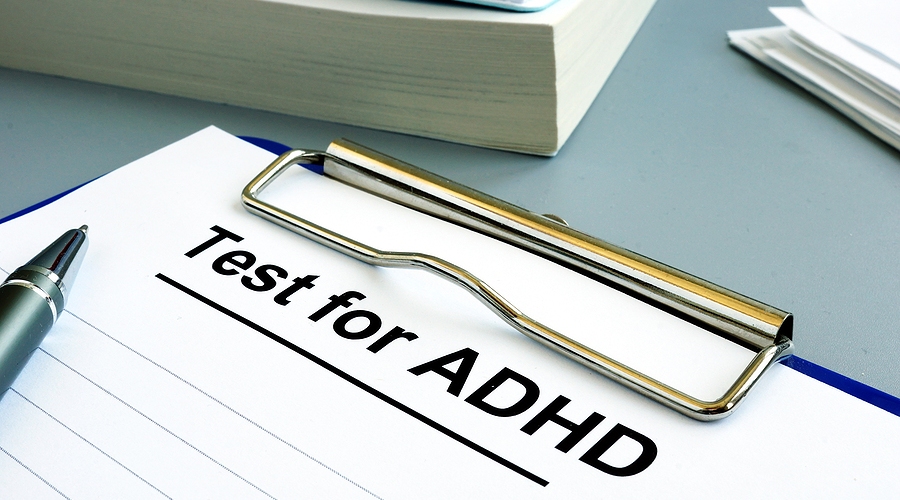
Most people come to us with one specific question.

Does my child have ADHD. Why is reading so much harder for him than for his classmates. Why have I struggled with focus my whole life and never known why.
A psychological assessment answers that question properly, with standardised instruments, a written report you can act on, and a clinician who sits down and explains what it all means.
We assess children and adults. Fees start at $450 for a single focused assessment and run to $2,400 and above for a full neurodevelopmental or cognitive battery. Appointments are usually available within one to three weeks, and no referral is needed.
A psychological assessment is a structured evaluation that combines standardised psychometric tests with clinical interview, history and observation to answer a specific diagnostic question. It is conducted by a trained psychologist and results in a formal written report.
A psychological test, or psych evaluation test, is one component of that. It is a single standardised instrument, normed against a comparison population, measuring something specific such as reading fluency, working memory or attention.
The distinction matters because a test result on its own means very little.
A test produces a score.
An assessment interprets that score against the person’s history, presentation, school or work performance, and behaviour across settings, then reaches a conclusion.
The same score can mean entirely different things in two different children. This is why an online screening questionnaire cannot give you a diagnosis, and why a proper assessment involves several hours of work beyond the testing itself.
Whether a diagnosis is present, and equally importantly whether it is not
A cognitive profile: verbal reasoning, non-verbal reasoning, working memory, processing speed, and where the gaps between them sit
Why a specific difficulty is happening, when the obvious explanation has turned out to be wrong
What accommodations would actually help, in school or at work
What intervention to pursue, and what to stop wasting time and money on
All assessments below are conducted in-house by our clinical psychologists, for both children and adults.
Our psychological assessments range from $450 to $2,400 and above, depending on the diagnostic question and the number of instruments required. What determines the price is how many testing hours are needed, not how thick the report is.
Rates vary with the qualifications and seniority of the psychologist. Sessions outside regular clinical hours, Monday to Friday 9.00am to 5.30pm, or on weekends, carry an additional $40 per hour.
If cost is a constraint, an assessment led by an associate psychologist, a Master’s-level clinician working under close supervision by a senior clinical psychologist, brings the overall cost down. Note that where a report is intended for MOE submission, it will be countersigned by the supervising senior registered clinical psychologist.
A comprehensive assessment fee bundles all of the following, which is why it is not comparable to an hourly session rate:
Cost depends entirely on the diagnostic question. An assessment to support an MOE Access Arrangement application is a different piece of work from a general adult mental health screening, even where both are "an assessment."
Tell us what you need the assessment to establish and we will give you a written quote before you commit to anything.
Useful context, because the private market range is wide and it is easy to overpay:
Go public if cost is the main constraint and you can wait. Go private if you need the report soon, particularly if there is a deadline attached to it.
A GP consultation at a polyclinic gets you a referral to a public hospital service such as IMH, NUH, KKH or SGH.
This unlocks government subsidies. Waiting times for non-urgent psychological assessment commonly run one to four months, and longer for specialised paediatric evaluations.
Direct booking, no referral needed, appointments usually available within one to three weeks, and the report delivered on a timeline you can plan around. Fully out of pocket.
This is the part parents most often get wrong. If you are assessing a child in order to apply for Access Arrangements for PSLE, O-Level or A-Level, the application has a deadline set well before the examination year. A four-month public waiting list plus report preparation time can put you past it.
If there is a deadline attached to your assessment, tell us at enquiry. If we cannot meet it we will say so rather than take the booking.
Yes, a private psychological assessment report can be submitted to your child’s school and to MOE. The report needs to be conducted by an appropriately qualified psychologist and must document how the difficulty functionally affects learning and examination performance, not simply state a diagnosis.
The school and MOE decide, not the psychologist. A report supports an application. It does not guarantee approval.
Apply early. Access Arrangement applications close well before the examination year. Start at least a year ahead.
Reports have a shelf life. Schools generally prefer assessments completed within the last two to three years.
Functional impact is what matters. A report stating a diagnosis without documenting its effect on reading speed, writing output or sustained attention in examination conditions is far less likely to succeed. Ours are written with this in mind.
Tell us at intake that the report is for MOE. It changes which instruments we select and how the report is written. This is the single most useful thing you can do to make the application succeed.
An assessment through your child's school by an MOE educational psychologist is free, but school resources are allocated by severity and the queue can be long. Many parents choose a private or NGO assessment, such as through the Dyslexia Association of Singapore, to begin intervention sooner.
Neither route is wrong. If your child's needs are clearly significant and there is no deadline pressure, the school route is worth pursuing first. If the difficulty is more subtle, or a deadline applies, private is usually faster.
A full assessment spans two to four separate appointments over a few weeks.
Intake interview.We gather developmental, educational, medical and family history, and clarify exactly what question the assessment needs to answer. For children this is usually with parents. If the report is for MOE or another specific purpose, tell us now.
Testing sessions.One or two sessions, typically two to four hours of testing in total, broken up with breaks. Children are not made to sit through it in one block. Most children find the testing itself more interesting than they expect.
Observation, where clinically indicated.For some child assessments we can observe in the home or classroom, which shows us behaviour that does not appear in a quiet testing room. This is arranged on request or where the clinical picture calls for it, and is not part of every assessment. Ask us whether it would add value in your case.
Scoring, interpretation and report writing.This happens between appointments and is the bulk of the work you do not see. Standardised scoring, comparison against normative data, integration with history and observation, and then the written report.
Feedback session.We sit down and explain the findings, in plain language, with the report in front of you. What the scores mean, what the diagnosis does and does not imply, what to do next, and what to ask the school for. You leave with the written report and a clear set of next steps.
A written report, signed by the assessing clinical psychologist, containing:
If a diagnosis is not warranted, the report says so and explains what is driving the difficulty instead. A clear no is a useful outcome, and a common one.
Assessments are conducted and reports signed by our clinical psychologists.
Where an associate psychologist administers part of the testing battery, the report is countersigned by the supervising senior clinical psychologist, in line with MOE's requirements for reports submitted in support of examination access applications.
If your assessment is intended for MOE submission, say so at intake and we will ensure the primary examiner and signatory meets the examination board's requirements.

A word on verification. Psychologists in Singapore are not licensed by the Ministry of Health, so the title is not legally protected. Before booking a psychological assessment anywhere, ask who will conduct it, what their postgraduate qualification is, whether they are listed on the Singapore Register of Psychologists through the Singapore Psychological Society, and who will sign the report. A practice that answers those four questions directly is telling you something useful. So is one that does not.
No. A private psychological assessment is confidential, protected under the Personal Data Protection Act, and is not shared with your employer, MINDEF or any government agency without your written consent.
This is one of the most common reasons working adults, NSFs and civil servants hesitate, so it is worth being precise:
If this concern is what has been holding you back, raise it at intake. It is a reasonable question and it will not be treated as suspicious.
Assessment is often the step that ends years of guessing. Parents frequently tell us the report was the first time anyone explained their child to them in a way that made sense.
Tell us what you need to establish and we will tell you what it would involve and what it would cost, before you commit.
Ours range from $450 for a single focused assessment to $2,400 and above for a comprehensive neurodevelopmental or cognitive battery. Across the market, expect roughly $300 to $800 in the public sector after subsidies, under $500 at university training clinics with supervised trainees, and commonly $1,500 to $3,500 or more in private practice.
The variation is driven by testing hours rather than report length. A comprehensive ADHD battery involves multiple instruments, several hours of administration, scoring against normative data, integration with history, a detailed written report and a feedback session. A single screener is one instrument and a brief report.
Because "an assessment" describes work that can take three hours or fifteen. Two things move the price:
Tell us the question you need answered and we will quote you in writing before you commit.
Everything from intake to feedback:
There are no separate charges for scoring or report writing. Sessions outside regular hours, Monday to Friday 9.00am to 5.30pm, or on weekends, carry an additional $40 per hour.
Generally no for standalone assessments. MediSave can be used for outpatient psychiatric treatment under the Chronic Disease Management Programme, but a standalone diagnostic psychological assessment is usually not claimable unless it forms part of an inpatient stay or is bundled within specific hospital settings.
Since our assessments are conducted in private practice by psychologists rather than by psychiatrists in a hospital setting, MediSave and MediShield Life will not typically apply.
Most standard personal Integrated Shield Plans do not cover outpatient psychological testing. Coverage generally depends on whether a corporate or international policy specifically includes outpatient mental health benefits or specialist assessment.
Worth checking:
Search your policy specifically for "psychological assessment," "psychometric testing" and "outpatient mental health," and ask whether a psychiatrist referral is needed for reimbursement. We provide itemised receipts.
Usually within one to three weeks. No referral is needed.
Yes, provided it is conducted by an appropriately qualified psychologist and documents functional impact rather than only stating a diagnosis. Private reports are routinely used to support applications for examination Access Arrangements and school-based support.
Four things matter:
Tell us at intake that the report is intended for MOE. It changes which instruments we select and how the report is written.
For documented conditions such as dyslexia, dysgraphia, dyscalculia or ADHD, an assessment report can support an application for:
The school and MOE make the final decision. A report supports the application rather than guaranteeing it.
Singapore has no statutory licensing for psychologists, so the title is not legally protected and verification is on you. Before booking an assessment anywhere, ask four questions:
Any competent practice will answer all four without hesitation.
No. Private assessments are confidential and protected under the Personal Data Protection Act. They are not shared with employers or government agencies without your written consent, and there is no national register of who has been assessed.
The exception is a small number of statutory roles, including certain uniformed services positions and high-level security vetting, where mandated screening or a duty to disclose may apply. If you hold or are applying for such a role, check your specific obligations.
You do. Nobody else, unless you provide written consent. If you want it sent to a school, doctor, employer or insurer, you tell us and we send it. Otherwise it stays between you and us.
For a child, parents or legal guardians receive the report.
Psychiatrists are medical doctors. They diagnose and can prescribe medication. Psychologists hold postgraduate degrees in psychology and conduct formal psychometric test batteries covering IQ, memory, attention and executive functioning, and deliver therapy, but do not prescribe.
For a formal cognitive, learning or neurodevelopmental profile, a psychologist conducts the assessment. If medication is likely to form part of the treatment, for example with ADHD, you will need a psychiatrist as well. The two work together frequently, and we refer where medication may help.
A psychological test is a single standardised instrument that produces a score. A psychological assessment interprets scores alongside history, presentation and behaviour across settings, and reaches a conclusion.
A test on its own can mislead. The same score means different things in different people, which is why an online questionnaire cannot produce a diagnosis, and why a proper assessment involves substantial work beyond the testing.
Not necessarily. Developmental assessment is possible from very early childhood, and identifying developmental delay early is one of the highest-value things an assessment can do.
What changes with age is which instruments are appropriate and how confident a conclusion can be. Tell us your child's age at enquiry and we will tell you honestly whether assessing now is useful or whether waiting would give a clearer picture.
That is a legitimate and fairly common outcome, and it is not a wasted assessment. Ruling a condition out is genuinely useful, and it redirects attention to what is actually driving the difficulty, which is often anxiety, sleep, a school environment mismatch, or a family stressor.
The report will say what is not present, explain what appears to be happening instead, and recommend accordingly.
Yes. Adult assessment is a substantial part of our work: adult ADHD, cognitive profiling, personality and diagnostic assessment, career and organisational profiling, and medico-legal and functional assessment including cognitive capacity and traumatic brain injury.
Many adults seek assessment after recognising a lifelong pattern, often after a child has been diagnosed. It is a common and entirely sensible reason to come.
In some cases, yes. Observation in the classroom or at home shows behaviour that does not appear in a quiet testing room, and it can add real value where the presenting picture is behavioural or where school and home reports differ.
It is arranged on request or where clinically indicated rather than being part of every assessment. Ask us whether it would add value in your case, and we will tell you honestly.
No, and be cautious of anywhere that offers one. A responsible assessment requires intake, standardised testing, scoring against normative data, and integration with history and collateral information. That is two to four appointments.
Contact Us
360A Joo Chiat Road Singapore 427605
© 2026 ImPossible Psychological Services. All Rights Reserved.
Directions
Overview of Location
ImPossible Psychological Services is located along Joo Chiat Road. The clinic is on the second floor of a shophouse directly above Joo Heng Restaurant. The area is famous for its iconic shophouses and for being a food haven. However, a strategic location of our entrance provides a safe and private environment for our clients.
Getting Here by Bus
16 (alight at Joo Chiat Road, bus stop code: 92179)
33 (alight opposite Marantha Hall, bus stop code: 82131)
10, 12, 14, 32, 40 (alight at East Coast Road, bus stop code: 92121 or 92129, followed by a 7 mins walk)
Getting Here By Train
Dakota MRT (CC8)
Getting Here by Car
You can come via ECP (Marine Parade exit) or PIE (Eunos exit). Proceed along East Coast Road, and enter Joo Chiat Road at the junction where i12 Katong is located.
ImPossible Psychological Services is located diagnonally opposite an open space carpark along Joo Chiat Road (J0017).