 Skip to content

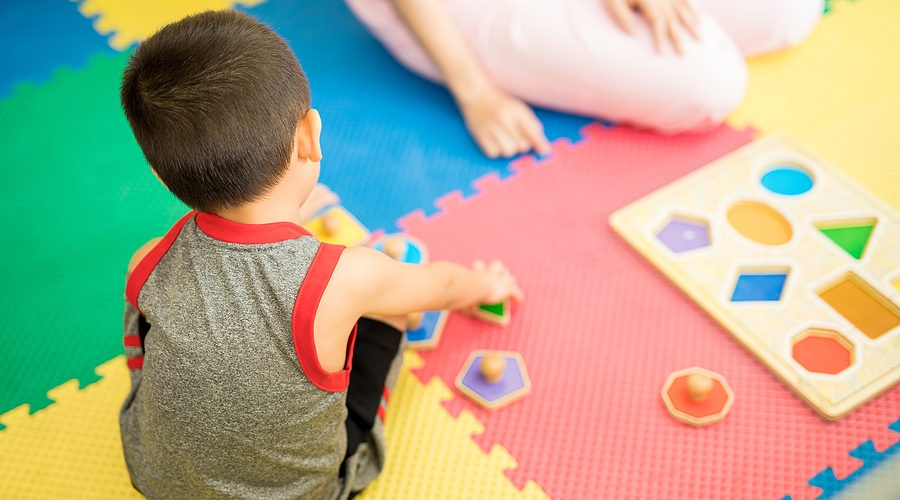
Most children do not have the language or emotional maturity to fully explain what they are feeling. When they experience difficult emotions – such as anxiety, family changes, grief or go through a major event, they often communicate through their behaviour rather than words. That is where play therapy can help.
Play therapy is an evidence-based psychological intervention that uses pay as a child’s natural way of communicating. Just as adults might talk through their worries in a counselling session, children use toys, art, movement, and storytelling to process emotions and experiences that feel too big or too confusing to say out loud.
What Actually Happens in a Play Therapy Session
A common misconception is that play therapy is just supervised playtime. In reality, sessions are led by a trained child therapist who uses a child’s natural play behaviours as a window into their inner world.
Sessions typically take place in a specially designed playroom stocked with sand trays, art materials, puppets, dolls, building blocks, and other carefully selected tools. While children are encouraged to play freely, the therapist is continually observing patterns, reflecting emotions, supporting emotional regulation, and helping the child process their experiences in developmentally appropriate ways.
There are two broad approaches used in practice:
- Non-directive (child- centred) play therapy: The child leads the session entirely. The therapist follows their cues, reflects their emotions, and creates a safe space for self-expression without directing the outcome.
- Directive play therapy: The therapist introduces specific activities or themes to help the child work through a particular issue, such as trauma, anxiety, emotional regulation or social difficulties.
Many therapists integrates elements of both, adjusting their approach based on the child’s needs and progress. Talking to your child about therapy before the first session helps set a calm, positive tone and reduces any anxiety they might have about the process.
The Research Behind Play Therapy
The effectiveness of play therapy is well-documented. A meta-analytic review of controlled studies found that Child-Centred Play Therapy (CCPT) produced significant improvements across a range of emotional and behavioural concerns, including improvements in self-efficacy, relationship stress, academic performance, and problem behaviours (Lin & Bratton, 2015). A separate meta-analysis of 23 CCPT studies conducted in primary school settings similarly found significant positive outcomes for children with disruptive behaviour, internalising difficulties, and academic challenges (Ray et al., 2015).
The approach is grounded in developmental psychology. Children between roughly three and twelve years old are still developing the cognitive, language and and emotional skills needed to fully express complex experiences verbally. Play gives them a developmentally appropriate outlet that meets them where they are, rather than asking them to function at an adult level of emotional articulation.
What Play Therapy Can Help With
Play therapy is used to support children facing a wide range of difficulties. Some of the most common reasons families seek it out include:
- Anxiety and excessive worry
- Trauma or post-traumatic stress
- Grief and bereavement
- Behavioural challenges at home or school
- Family changes such as divorce or a new sibling
- Social difficulties or low self-esteem
- Neurodevelopmental differences, including ADHD and autism spectrum conditions
Research specifically examining CCPT and trauma found consistent evidence that the approach can produce significant therapeutic outcomes for children who have experienced adverse childhood events, with benefits including reductions in externalised behaviours and improvements in emotional regulation (Parker et al., 2021a).
In some cases, children may not be able to explain what is upsetting them. Play therapy provides a safe space where these emotions can be explored at the child’s own pace.
The Role of Parents in the Process
Play therapy is not something that happens in isolation from family life. Parents play an important supporting role in supporting their child’s progress outside the therapy room.
The way a parent frames therapy makes a real difference. Children often take their emotional cues from the adults around them, so approaching it with openness and reassurance tends to go a long way. Most therapists also schedule regular parent feedback sessions to discuss progress, share observations, and explore ways of supporting the child at home while respecting the child’s therapeutic privacy.
Some programmes incorporate a specific parent component, such as Child-Parent Relationship Therapy (CPRT), which trains parents in child-centred play skills they can use at home. Research supports the value of involving caregivers in the therapeutic process, with studies showing that parental participation is associated with stronger treatment outcomes (Lin & Bratton, 2015).
How Long Does Play Therapy Take?
The length of therapy varies depending on the child’s individual needs, developmental stage, and presenting concerns.
Some children make meaningful shifts in eight to twelve sessions (Keith, 2026). Others, particularly those working through significant trauma or longer-standing difficulties, may need more time.
Rather than following a fixed number of sessions, therapists regularly review progress and adjust treatment according to the child’s evolving needs.
Ray et al. (2015) noted that the range of sessions across studies conducted in school settings spanned from 4 to 25, with an average of 12—a useful benchmark, though individual needs vary. It is a collaborative process, not a fixed programme, and the therapist will adjust the approach as the child progresses.
How to Know If Your Child Might Benefit
If your child is struggling emotionally or behaviourally and the usual approaches are not helping, play therapy is a reasonable next step to explore. Signs that a child might benefit include persistent anxiety, regression in previously mastered skills, frequent emotional outbursts, withdrawal from activities they previously enjoyed, or significant difficulty managing transitions and change.
It is also appropriate to consider it as a preventative or supportive measure during a known period of stress, such as a parental separation or a bereavement in the family. You do not have to wait until things reach a crisis point.
When exploring play therapy, it is important to find a qualified and experienced practitioner. Look for someone with formal training in play therapy, experience working with your child’s specific concerns, and a clear approach to involving caregivers throughout the process. An initial conversation can help you understand the therapist’s methods, how progress is reviewed, and how parents are kept informed while respecting the child’s therapeutic space.
Getting Started
Children are remarkably resilient, and they heal best when they have the right support around them. Play therapy gives them a space that is entirely their own, where they can explore difficult feelings at their own pace, with a trusted adult guiding the process.
References
Keith, B. (2026). Play therapy for children: What parents need to know. MHC Group. https://www.mentalhealthcounselinggroup.com/post/play-therapy-for-children-what-parents-need-to-know
Lin, Y.-W., & Bratton, S. C. (2015). A meta-analytic review of child-centered play therapy approaches. Journal of Counseling & Development, 93(1), 45–58. https://doi.org/10.1002/j.1556-6676.2015.00180.x
Parker, M. M., Hergenrather, K., Smelser, Q., & Kelly, C. T. (2021a). Exploring child-centered play therapy and trauma: A systematic review of literature. International Journal of Play Therapy, 30(1), 2–13. https://doi.org/10.1037/pla0000136
Parker, M. M., Hunnicutt Hollenbaugh, K. M., & Kelly, C. T. (2021b). Exploring the impact of child-centered play therapy for children exhibiting behavioral problems: A meta-analysis. International Journal of Play Therapy, 30(4), 259–271. https://doi.org/10.1037/pla0000128
Ray, D. C., Armstrong, S. A., Balkin, R. S., & Jayne, K. M. (2015). Child-centered play therapy in the schools: Review and meta-analysis. Psychology in the Schools, 52(2), 107–123. https://doi.org/10.1002/pits.21798